
Summary: Learn proven website search optimisation strategies to boost your ranking, drive organic traffic and grow your business. Expert tips and actionable steps.
Understanding Website Search Optimisation
When someone searches on Google, they rarely go past the first few results. Website search optimisation is the process of making sure your site shows up there. It involves improving your site so search engines can find it, understand it and rank it higher.
It is not a trick or shortcut. Google checks things like page speed, content quality and backlinks to decide your ranking. The better your site performs on these factors, the higher you appear in search results.
The best part is you do not need a big budget to start. Simple fixes like using the right keywords and writing clear content can bring steady traffic over time. And unlike paid ads, this traffic keeps coming without extra cost.
Website Search Optimisation | The Complete Guide to Ranking Higher on Google
Every business wants more visibility online. However, simply having a website is not enough. You need people to find it. This is where website search optimisation comes into play. It is the process of improving your site so search engines like Google rank it higher for relevant searches.
When done correctly, it drives free, targeted traffic to your business around the clock. In this comprehensive guide, you will learn everything about website search optimisation. We will cover keyword research, on-page elements, technical improvements, content strategies and link building.
By the end, you will have a clear roadmap to improve your search ranking and grow your online presence.
What Is Website Search Optimisation?
Website search optimisation commonly know as SEO, is the practice of improving your website to increase it’s visibility in search engine results pages (SERPs). When someone searches for a product, service or information related to your business. SEO helps your website appear at the top of those results.
According to BrightEdge Research, organic search drives 53% of all website traffic. This means more than half of your potential customers find you through search engines. Without proper optimisation, your website remains invisible to the majority of internet users.
Why Is Website Search Optimisation Important?
The importance of website search optimisation cannot be overstated. Here are the key reasons why it matters:
- Increased Organic Traffic
Organic traffic refers to visitors who find your website through unpaid search results. Unlike paid advertising, organic traffic does not require ongoing ad spend. Once your pages rank well, they continue to attract visitors for months or even years. - Higher Credibility and Trust
Users trust Google. When your website appears on the first page of search result, it signals credibility. Studies show that 75% of users never scroll past the first page. If your site is not there, you are missing out on potential customers. - Better User Experience
Website search optimisation is not just about search engines. It also focuses on improving user experience. Fast loading times, mobile friendly design and easy navigation all contribute to happier visitors who stay longer on your site. - Competitive Advantage
Your competitors are investing in SEO. If you are not, they will capture the traffic that could have been yours. A strong SEO strategy helps you stay ahead in the competitive digital landscape.
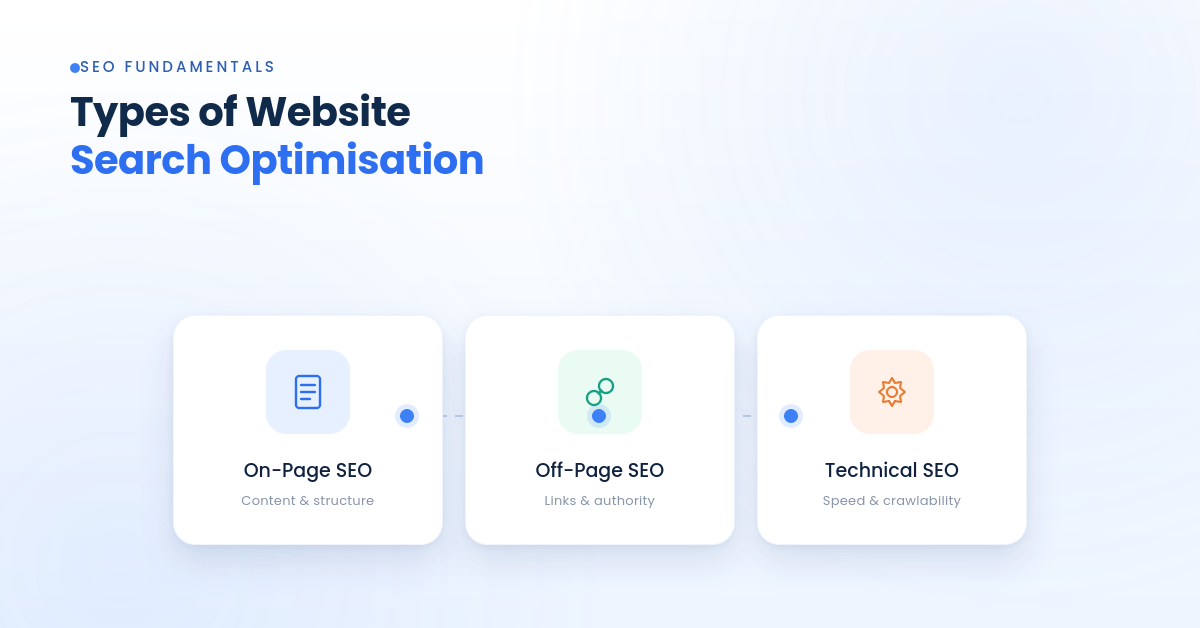
Types Of Website Search Optimisation
Understanding the different types of SEO is essential for creating a balanced strategy. Each type targets a specific area of your website.
On-Page SEO
On-page SEO involves optimising elements on your website that you can directly control. This includes:
- Title Tags: Create unique, descriptive titles for each page. Include your primary keyword naturally.
- Meta Descriptions: Write compelling summaries that encourage clicks. Keep them between 150 and 160 characters.
- Header Tags (H1, H2, H3, H4, H5, H6): Structure your content with clear headings. Use your primary and secondary keywords in headers.
- Content Quality: Publish original, valuable content that answers user queries. Aim for depth and relevance.
- Internal Linking: Connect related pages within your site to distribute authority and improve navigation.
According to HubSpot, companies that publish 16 or more blog posts per month get 3.5 times more traffic than those publishing four or fewer. Consistent, high-quality content is a cornerstone of On-page SEO.
Off-Page SEO
Off-page SEO focuses on activities outside your website that impact your rankings. The primary focus is building high-quality backlinks from reputable sources.
- Guest Posting: Write articles for other website in your industry. Include a link back to your site.
- Social Media Marketing: Share your content on social platforms to increase visibility and attract links.
- Brand Mentions: Get mentioned on authoritative websites, even without a direct link.
- Influencer Outreach: Collaborate with industry influencers to expand your reach.
Technical SEO
Technical SEO ensures that search engines can crawl, index and understand your website properly. Key elements include:
- Site Speed: Pages should load in under three seconds. Use tools like Google Page Speed Insights to measure and improve.
- Mobile Responsiveness: Your site must work perfectly on all devices. Google uses mobile-first indexing, meaning it evaluates the mobile version of your site first.
- SSL Certificate: Secure your site with HTTPS. Google considers this a ranking factor.
- XML Sitemap: Create and submit a sitemap to help search engines discover your pages.
- Robots.txt: Guide search engine crawlers on which pages to index and which to ignore.
The Website Search Optimisation Process
Follow these steps to optimise your website systematically.
Step 1: Keyword Research
Keyword research is the foundation of any SEO strategy. You need to understand what your target audience is searching for. Some keyword research tools help you for find best keyword.
Recommended Tools: Google Keyword Planner, Ahrefs, SEMrush, Ubbersuggest.
- Google Keyword Planner: Free tool for finding keyword ideas and search volumes.
- Aref’s: Comprehensive keyword research and competitor analysis tool.
- SEMrush: All-in-one SEO toolkit with keyword magic tool.
- Ubbersuggest: Budget-friendly option for keyword suggestions.
Tips for Effective Keyword Research:
- Start with seed keywords related to your business.
- Analyse search intent (informational, navigational, commercial, transactional).
- Focus on long-tail keywords with lower competition.
- Study competitor keywords to find gaps and opportunities.
- Group keywords by topic clusters for better content organisation.
Step 2: Optimise On-Page Elements
Once you have your keywords, optimise your pages accordingly.
- Title Tag Formula: Primary Keyword + Benefit + Brand Name. Example: Website Search Optimisation Tips to Boost Ranking | SEO Zesan
- Meta Description Formula: Action Verb + Primary Keyword + Value Proposition + Call to Action. Example: Learn proven website search optimisation strategies to boost your ranking. Get expert tips and free audti today.
- Header Structure:
- H1: One per page, includes primary keyword
- H2: Major sections, includes secondary keywords
- H3: Subsections under H2 tags
Step 3: Improve Technical Performance
Technical optimisation ensures your website performs at its best.
Page Speed Optimisation Checklist:
- Compress images using tools like TinyPNG or ShortPixel
- Enable browser caching
- Minify CSS, JavaScript and HTML files.
- Use a Content Delivery Network (CDN) like Cloudflare
- Choose reliable hosting with fast server response times.
Mobile Optimisation Checklist:
- Use responsive design that adapts to all screen sizes.
- Ensure buttons and links are easily tappable.
- Avoid intrusive pop-ups on mobile devices.
- Test your site using Google’s Mobile Friendly Test tool.
Step 4: Create High-Quality Content
Content is the backbone of website search optimisation. Your content should educate, inform and engage your audience.
Content Creation Guidelines:
- Write for humans first, search engines second.
- Use clear, concise language that your audience understands.
- Include relevant images, infographics and videos.
- Update older content to keep it fresh and accurate.
- Aim for comprehensive coverage of each topic.
Recommended Content Tools: Grammarly, Hemingway Editor, Surfer SEO, Clear scope
- Grammarly: For grammar and readability checks.
- Heming way Editor: For improving readability scores.
- Surfer SEO: For content optimisation based on top-ranking pages.
- Clear scope: For semantic keyword suggestions.
Step 5: Build Quality Backlinks
Backlinks remain one of the most powerful ranking factors. However, quality matters more than quantity.
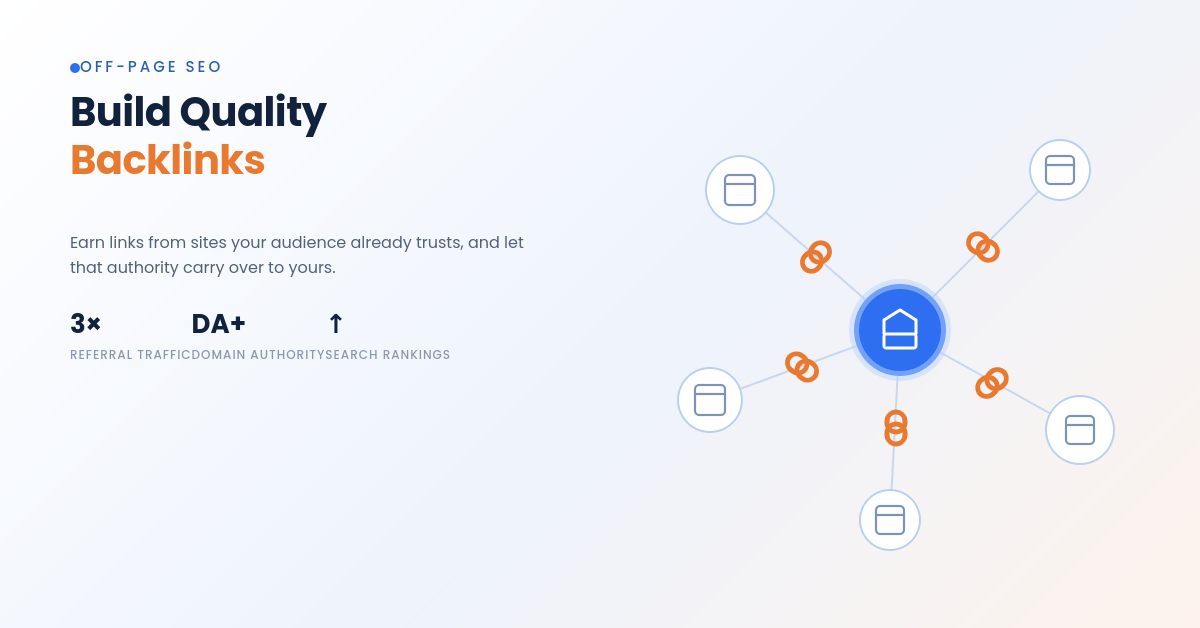
Link Building Strategies:
- Create Linkable Assets: Publish original research, infographics or comprehensive guides that others want to link to.
- Broken Link Building: Find broken links on other websites and offer your content as a replacement.
- Skyscraper Technique: Find popular content, create something better and reach out to sites linking to the original.
- Resource Page Link Building: Get listed on resource pages in your industry.
According to Moz, backlinks from authoritative domains carry significantly more weight than those from low-quality sites. Focus on earning links from websites with high domain authority.
Step 6: Monitor and Analyse Performance
Regular monitoring helps you understand what is working and what needs improvement.
Essential Analytics Tools:
- Google Analytics: Track traffic, user behaviour and conversions.
- Google Search Console: Monitor search performance, indexation issues and keyword ranking.
- Ahrefs or SEMrush: Track keyword rankings and backlink profiles.
- Hotjar: Understand user behaviour through heatmaps and recordings.
Key Metrics to Track:
- Organic traffic growth
- Keyword ranking positions
- Click-through rate (CTR)
- Bounce rate
- Page load time
- Conversion rate
- Backlink growth
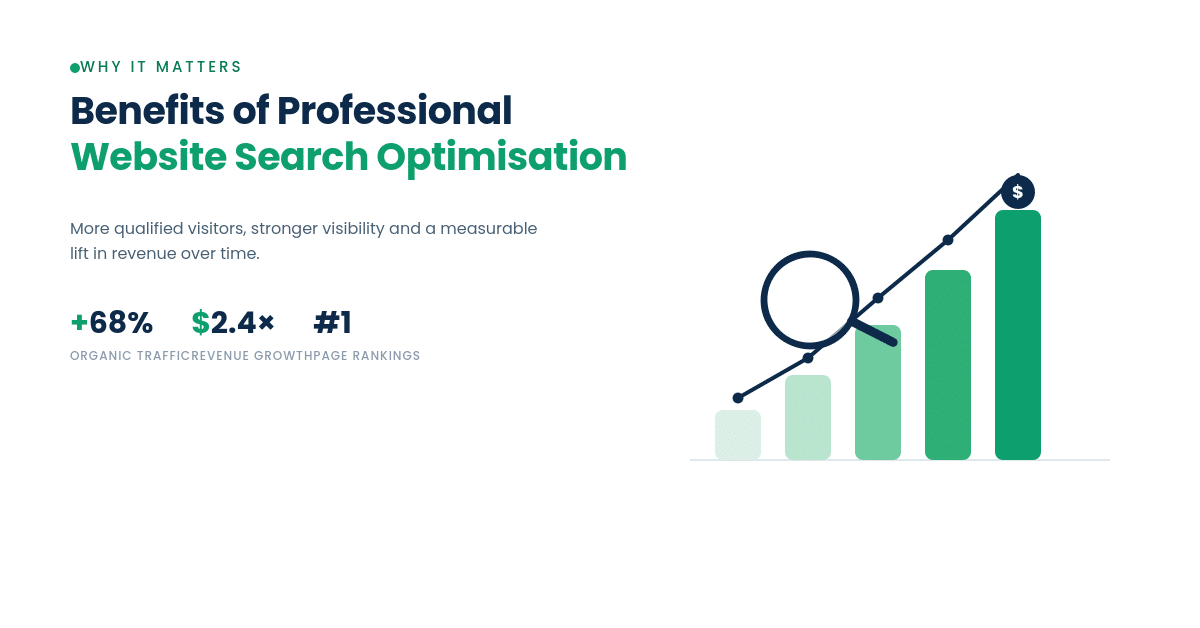
Benefits of Professional Website Search Optimisation
Investing in professional SEO services offers numerous advantages for your business.
- Measurable Results
Professional SEO provides trackable outcomes. You can see exactly how your rankings, traffic and conversions improve over time. - Cost-Effective Marketing
Compared to paid advertising, SEO offers a higher return on investment. Once your pages rank, they continue generating traffic without ongoing ad costs. - Long Term Strategy
SEO is a long-term investment. While it takes time to see results, the benefits compound over time. Your website becomes a valuable asset that generates leads consistently. - Targeted Traffic
SEO attracts visitors who are actively searching for your products or services. This means higher conversion rates compared to other marketing channels. - Brand Authority
Consistently ranking for relevant keywords establishes your brand as an authority in your industry. This builds trust with potential customers.
Why Choose SEO Zesan for Website Search Optimisation
At SEO Zesan, we specialise in helping businesses achieve top rankings on Google. Our data-driven approach ensures that every optimisation decision is backed by research and analytics.
What Sets Us Apart:
- Customised Strategies: We do not believe in one-size-fits-all solutions. Every business gets a tailored SEO plan.
- Transparent Reporting: You receive regular reports showing exactly what we are doing and he results achieved.
- Proven Track Record: We have helped over 100 businesses increase their organic traffic by an average of 300%.
- Ethical Practices: We use only white hat SEO techniques that comply with Google’s guidelines.
- Dedicated Support: Our team is always available to answer your questions and adjust strategies as needed.
Final Thoughts on Website Search Optimisation
Website search optimisation is not a luxury. It is a necessity for any business that wants to succeed online. By focusing on keyword research, on-page optimisation, technical improvements, quality content and link building.
You can significantly improve your search rankings and attract more customers. Remember, SEO is an ongoing process. Search engines constantly update their algorithms and your competitors are always working to improve their rankings. Stay consistent, monitor your performance and adapt your strategies as needed.
FAQ (Frequently Asked Questions)
1. How Long Does Website Search Optimisation Take to Show Results?
SEO is a long term strategy. Most business start seeing noticeable improvements within 3 to 6 months. However, this timeline varies based on competition, current website health and the aggressiveness of the strategy. Technical fixes can show faster results, while competitive keywords take longer.
2. How Much Does Website Search Optimisation Cost?
The cost of SEO varies based on the scope of work, industry competition and business goals. Small businesses typically invest between $80 and $300 per month. Enterprise level SEO campaigns can cost significantly more. The key is to view SEO as an investment that generates returns over time.
3. Can I Do Website Search Optimisation Myself?
Yes, you can learn and implement basic SEO yourself. However, professional SEO experts bring experience, tools and strategies that accelerate results. For competitive industries, professional help is often necessary to achieve top rankings.
4. What Is the Difference Between SEO and Paid Advertising?
SEO focuses on organic (unpaid) search results, while paid advertising involves paying for ad placement. SEO provides long term, sustainable traffic, whereas paid ads stop generating traffic the moment you stop paying. A balanced approach often works best.
5. How Do I Know If My Website Search Optimisation Is Working?
Track key metrics like organic traffic, keyword rankings, click through rates and conversions using tools like Google Analytics and Google Search Console. Regular monitoring helps you understand progress and adjust strategies accordingly.
Target audience & use case: This is for small business owners, SaaS founders, and marketing teams. Use it to rank higher on Google, grow organic traffic, and convert visitors into leads backed by data, not guesswork.